61) His Supplication in Abasing himself

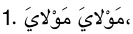


















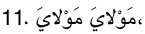


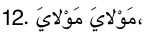


1- My Master, my Master! Thou art the Master and I the servant! Has anyone mercy upon the servant but the master?
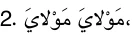
2- My Master, my Master! Thou art the Exalted and I the abased! Has anyone mercy upon the abased but the exalted?
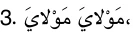
3- My Master, my Master! Thou art the Creator and I the creature! Has anyone mercy upon the creature but the creator?
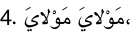
4- My Master, My Master! Thou art the Giver and I the asker! Has anyone mercy upon the asker but the giver?
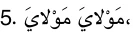
5- My Master, My Master! Thou art the Helper and I the seeker of help! Has anyone mercy upon the seeker of help but the helper?
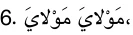
6- My Master, My Master! Thou art the Subsistent and I the perishing! Has anyone mercy upon the perishing but the subsistent?
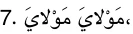
7- My Master, My Master! Thou art the Everlasting and I the vanishing! Has anyone mercy upon the vanishing but the everlasting?
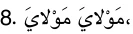
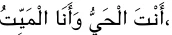
8- My Master, My Master! Thou art the Living and I the dead! Has anyone mercy upon the dead but the living?
9- My Master, My Master! Thou art the Strong and I the weak! Has anyone mercy upon the weak but the strong?
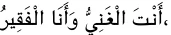
10- My Master, My Master! Thou art the Rich and I the poor! Has anyone mercy upon the poor but the rich?
11- My Master, My Master! Thou art the Great and I the small! Has anyone mercy upon the small but the great?
12- My Master, My Master! Thou art the Owner and I the owned! Has anyone mercy upon the owned but the owner?
1. This verse and the following allude to the well-known hadith qudsi: 'Might is My loincloth and mightiness My cloak. If anyone contends with Me in either of these, I will cast him into Gehenna.' Cf. W. Graham, Divine Word and Prophetic Word, pp. 162-3.
2. This is probably an allusion to the Highest Assembly, the angels mentioned in 37:8 and 38:69. 3. Cf. 20:6. 4. Cf. 9:78: Know they not that God knows their secret and their whispered conversation, and that God knows the things unseen? See also 43:80, 58:7. 5. Ibn Shihab al-Zuhri (d. 124/742) was a well known jurist and traditionist and, as mentioned in the introduction, is credited with being the first to call the Imam by the title 'Zayn al-'Abidin'. Sa'id ibn al-Musayyib (d. 94/712-713), one of the 'seven jurists' of Medina, was known as the 'Chief of the Followers' (sayyid al-tabi'in), that is, those who followed the generation of the Prophet's Companions. 6. On the 'mediation' given to the Imams, see the note on 47.56. 7. 3:26 8. Allusion to the hadith qudsi, 'I am with My servant's opinion of Me'; in some versions, there occurs the phrase, 'so let him think about Me what he will' (Graham, Divine Word, pp. 127-130). 9. Again reference to 40:60: Supplicate Me and I will respond to you. 10. Allusion to Qur'anic verses such as: Surely God will not fail in His promise (13:31), and There is no change for the words of God (10:64). 11. Allusion to 27:62. Cf. Supplication 10.4. 12. 7:156 13. This supplication seems to be another version of 48.13 ff. 14. Cf. note 256. 15. Cf. note 257. 16. Part of the hadith quoted in the introduction and note 256.