10. Etiquette Of Travels By Sea And Crossing Bridges
In authentic tradition, it is narrated from Imam Muhammad Al-Baqir (‘a) and Imam Ja’far As-Sadiq (‘a) that it is detestable to undertake sea journey with the aim of trade.
It is narrated from Amir Al-Mu’minin (‘a) that one, who undertakes a sea journey with the aim of business, he has not made effort to earn through a nice channel.
In a true tradition, it is narrated from Imam Muhammad Al-Baqir (‘a) that one, who boards a ship with the intention of trading, he has put his religion in danger.
Reliable traditions from the Holy Prophet (S) state that traveling by sea during stormy season is prohibited.
A good tradition from Imam Ar-Ridha’ (‘a) states that when one is embarking on a ship or a boat, one should say:

“In the name of Allah be its sailing and its anchoring; most surely my Lord is Forgiving, Merciful” (11:41).
If there is a storm, you should lie on your left and point out to the waves with the left hand and recite:

Translation: Be still, by the power of Allah and adopt stillness through the tranquillity of Allah. And be guided by the permission of Allah. And there is no power and might, except by Allah.
The narrator of this report says that I travelled many times by sea and whenever there was a storm, I acted according to the direction of Imam Ali Ar-Ridha’ (‘a) and the sea used to fall so quiet as if there was no storm at all.
It is narrated from Amir Al-Mu’minin (‘a) that one, who fears drowning, he should recite the following:

In the name of Allah be the sailing and anchoring; most surely my Lord is Forgiving, Merciful. (11:41)
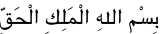
In the name of Allah, Who is the true ruler.


And they have not honoured Allah with the honour that is due to Him; and the whole earth shall be in His grip on the day of resurrection and the heavens rolled up in His right hand; glory be to Him, and may He be exalted above what they associate (with Him). (39:67)
In another tradition, it is narrated from the same Imam that if you fear drowning, you should recite the following verses:

“Allah, Who revealed the Book, and He befriends the good”. (7:196).


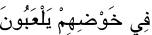
“And they do not assign to Allah the attributes due to Him when they say: Allah has not revealed anything to a mortal Say: Who revealed the Book which Musa brought, a light and a guidance to men, which you make into scattered writings which you show while you conceal much? And you were taught what you did not know, (neither) you nor your fathers. Say: Allah then leave them sporting in their vain discourses.” (6:91).
In another tradition, it is stated that whenever one wants to embark on a ship, one should recite hundred times:

Translation: Allah is the greatest.
...a hundred times Durood, and the following curse a hundred times:

Translation: O Allah, curse those, who oppressed Aali Muhammad (‘a).
Then recite:











Translation: In the name of Allah and by Allah and blessings be on Muhammad, the Messenger of Allah and upon the truthful among his descendants. O Allah, regard our travel as good deeds and magnify its rewards for us. O Allah, because of You, we rise up after sleep and we have focused our attention upon You only.
We have faith in You only. We hold to each of Your ropes and on You we rely. O Allah, we trust You only and hope in You alone.
You are our helper. And without Your permission, neither do we get any favour nor any calamity befalls us. O Allah, we halt at a station relying only upon You and with Your support, we set out again. O Allah, please make our path free of hardships and may relief be more. You are the protector of life and property.
You also grant protection in the sea and accord security during the journey. Nuh (‘a) said: Come aboard in the name of Allah, due to which ships sail and berth.
Without any doubt, My Lord is most forgiving and merciful. And they have not honoured Allah with the honour that is due to Him; and the whole earth shall be in His grip on the day of resurrection and the heavens rolled up in His right hand; glory be to Him, and may He be exalted above what they associate (with Him). O Allah, You are better than what the people delegate to You.
Then, You are my honoured chief. And You are greater than those whom people intend to visit. You have appointed a rank for every visitor to the tomb and a gift for everyone, who visits Your House. I beseech You that my gift from You should be immunity from Hell fire.
O Allah, accept my jogging (Sayee) to be thanksgiving and have mercy on my separation from my family, although You owe no favour to me. On the contrary, it is Your greatest favour on me that you open a venue for me to visit the grave of Your Wali. That You bestowed on me the awareness of his excellence.
That You kept me secured at night and day, till You conveyed me to this place. O Allah, I have reposed hope in You; so please do not make me hopeless. And I have an expectation from You, so do not make me despair. And O the most merciful of the merciful ones, deem this journey of mine to be the penalty of my sins.
Sayyid Ibn Tawus (r.a.) said that if the aim of the traveller is anything other than Ziyarat, he should change the words of the supplication to match his aim.
In reliable tradition, it is narrated from Imam Ja’far As-Sadiq (‘a) that a Satan lives on every bridge. So, when you reach there, you should recite:

Translation: In the name of Allah, the Beneficent, the Merciful.
So that he may flee from you.
In another tradition, it is narrated that when you step on the bridge, you should recite:

Translation: In the name of Allah. O Allah, please keep away the accursed Satan from me.