2. Etiquette Of Visiting A Bath And Supplications To Be Recited
According to many reliable traditions, a person, who has faith in Judgment Day, should wrap a cloth around the waist while bathing.
It is narrated from Imam Ja’far As-Sadiq (‘a) that sins are concealed of a person who visits a bath with a cloth wrapped around his waist.
Another tradition prohibits seeing others naked in the bathroom and a person, who thus complies, God will free him from Hellfire.
The Holy Prophet (S) has prohibited bathing naked under the sky and in streams and rivers and also said that there are angels in the streams. In the same manner, washing or bathing naked in bathroom is prohibited.
According to Imam Ja’far As-Sadiq (‘a), one should eat a little before going to the bathroom; for if there is something in the stomach, it will strengthen the body. Thus, the temperature of the stomach will be eased. It is further stated that if one wants to fatten up, he should eat a little before entering the bathroom, but if he wants to become thin, he should visit the bathroom first thing in the morning, without taking any food.
It is mentioned in another tradition that when the Imam wanted to visit the bath, he used to eat a little. The narrator says: I said: People say that it is better to visit the bath on an empty stomach. He said: No, you should eat a little before you visit the bath as it removes yellow bile and lowers the inner temperature.
He said in another report that visiting the bath on an empty stomach removes yellow bile; and if you visit after eating a little, it would remove yellow bile and melancholia.
He also said that if you want to fatten up, you must visit the bath after eating a little, and if you want to thin down, you should visit the bath on an empty stomach.
Through reliable chains, it is narrated from Imam Ja’far As-Sadiq (‘a) that when you remove your clothes in the dressing room, you should recite the following supplication:

Translation: O Allah, remove the collar of hypocrisy from my neck and keep me steadfast on faith.
Upon entering the first section of the bath, recite:

Translation: O Allah, I seek Your refuge from the evil of the self and its distress.
When you enter the second section, you recite:

Translation: O Allah, please remove every kind of impurity and filth from me and purify my body and heart.
Then pour some hot water on your head and if possible, drink a little as it cleans the bladder and urinary tract. After waiting in the second compartment for some time, enter the third compartment and recite as follows:

Translation: We seek the refuge of God from hellfire and desire Paradise from Him.
As long as you remain in that compartment, you should recite the following supplication repeatedly and never drink cold water whilst you are in the bath and never eat musk melon, as it disturbs digestion. You should not pour cold water on the body, as it weakens the body.
But when you leave the bath, you should wash the feet with cold water, as it removes physical ailments; and when you begin dressing, you should recite as follows:

Translation: O Allah, bestow me the dress of piety and save me from destruction.
If you act on these directions, you will remain secure from every ailment.
It is narrated from Amir Al-Mu’minin (‘a) that after you leave the bath, if a believer brother tells you:

Translation: May Allah bless your bath and taking sweat.
You should reply:
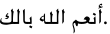
Translation: May Allah also keep your heart fresh.
It is mentioned in another traditional report that when Imam Al-Hasan (‘a) came out of the bath, a person greeted him saying:
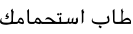
Translation: May Allah bless your bath and taking sweat.
Imam (‘a) said: Don’t say like this.
That person said:
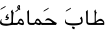
Translation: Blessed be your taking bath.
Imam (‘a) said: Don’t say this also.
Then that person said:
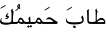
Translation: May your taking sweat be blessed.
Imam (‘a) said: Don’t say this also.
He said: Then teach me what I should say.
Imam (‘a) said: Say:

Translation: May Allah bless what is purified from you and may He clean all your senses.
The explanation is that may the parts of your body, which have become purified in the bath, may Allah give you inner goodness impart forgiveness of sins and good sense of nice acts. And may the main physical parts; like the heart, soul and intellect, and may He clean all senses from the filth of sins,
ignorance and deviation.
It is mentioned in another report that people should congratulate one, who leaves the bath, in the following manner:
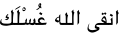
Translation: May Allah consider your bath to be inner purity.
The following should be mentioned in reply:

Translation: May God, make you also pure of sins.
Imam Ja’far As-Sadiq (‘a) said that when you leave the bath, you should wear the head gear. He also said: You should wash the feet after leaving the bath as it reduces susceptibility to hemicrania (migraine).
It is mentioned in another tradition that when Imam Muhammad Al-Baqir (‘a) and Imam Ja’far As-Sadiq (‘a) came out of the bath, they used to put on the head gear, whether it was winter or summer; and they used to say that it secures one from headache.
It is mentioned in a traditional report that when a person enters a bath and his temperature increases, he should pour cold water on his head and it will bring the temperature down.
It is narrated from Imam Musa Al-Kazim (‘a) that you should visit the bath on Wednesdays.