BIDDING FAREWELL TO IMAM ALI (A)
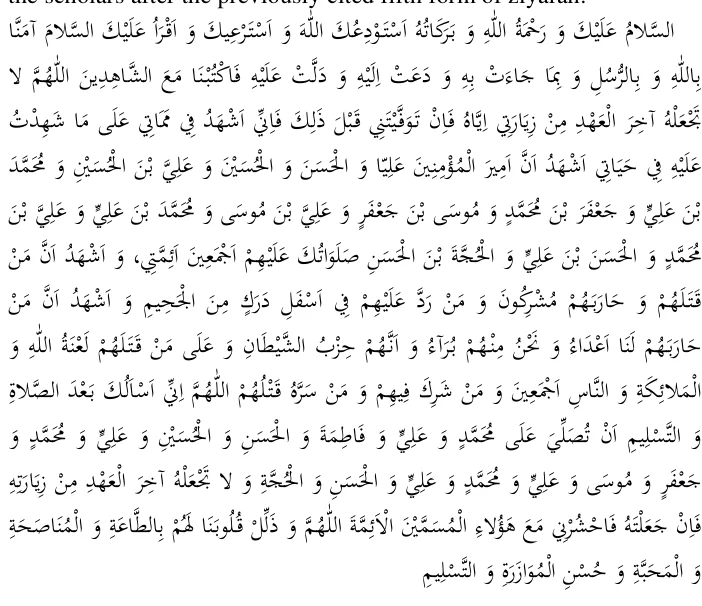
One who intends to leave the holy shrine of Imam ‘Ali (‘a) may say the following form of bidding farewell, which has been mentioned by the scholars after the previously cited fifth form of ziyarah:
The timed forms of ziyarah of Imam ‘Ali’s holy shrine are in fact numerous. The first of which is the ziyarah on the Ghadir Day (the eighteenth of Dhu’l-Hijjah). Imam al-Rida (‘a) is reported to have said, “Listen, son of Abu-Nasr! Wherever you are, try your best to present yourself at the tomb of Amir al-Mu’minin (‘a) on the Ghadir Day. Verily, Almighty Allah forgives the sins of sixty years of each faithful believer and Muslim individual, male and female (who presents himself/herself thereat on this day). On this day too, Almighty Allah releases from Hellfire two folds as many people as He releases during the month of Ramazan, the Grand (i.e Qadr) Night and the night before ‘Id al-Fitr Night.”
A number of forms of ziyarah has been dedicated to this day:
First: The previously mentioned ziyarah of Aminullah (the second of the untimed forms of ziyarah) may be said on the Day of Ghadir.
ZIYARAH ON THE DAY OF GHADEER
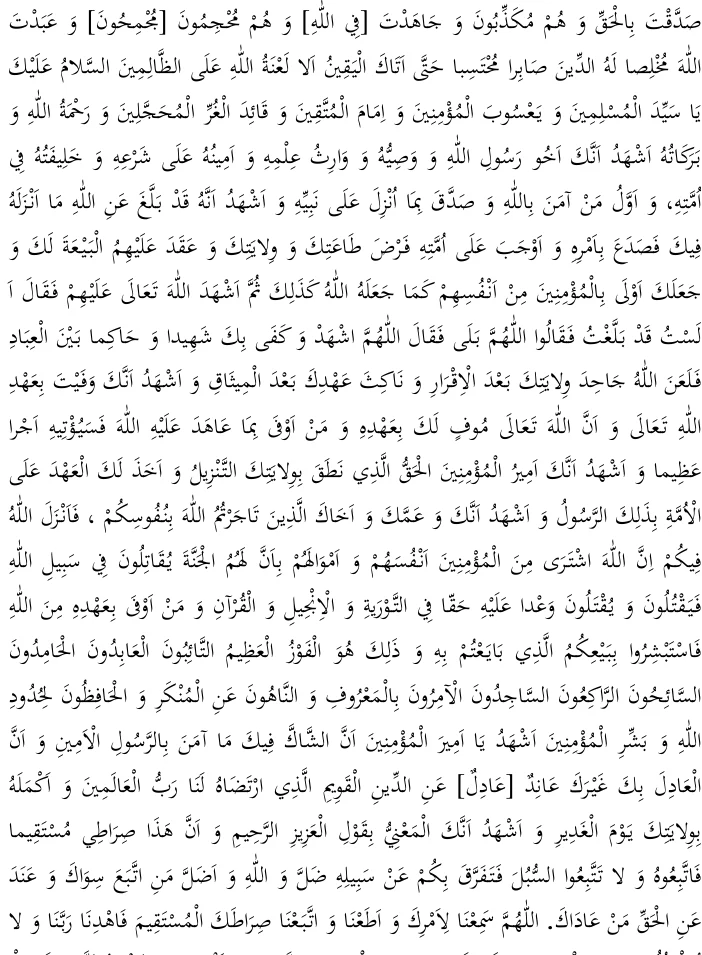
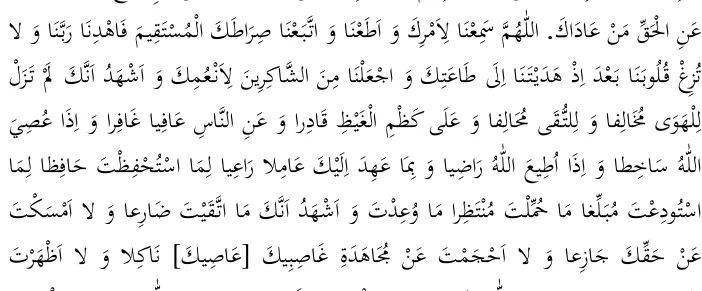
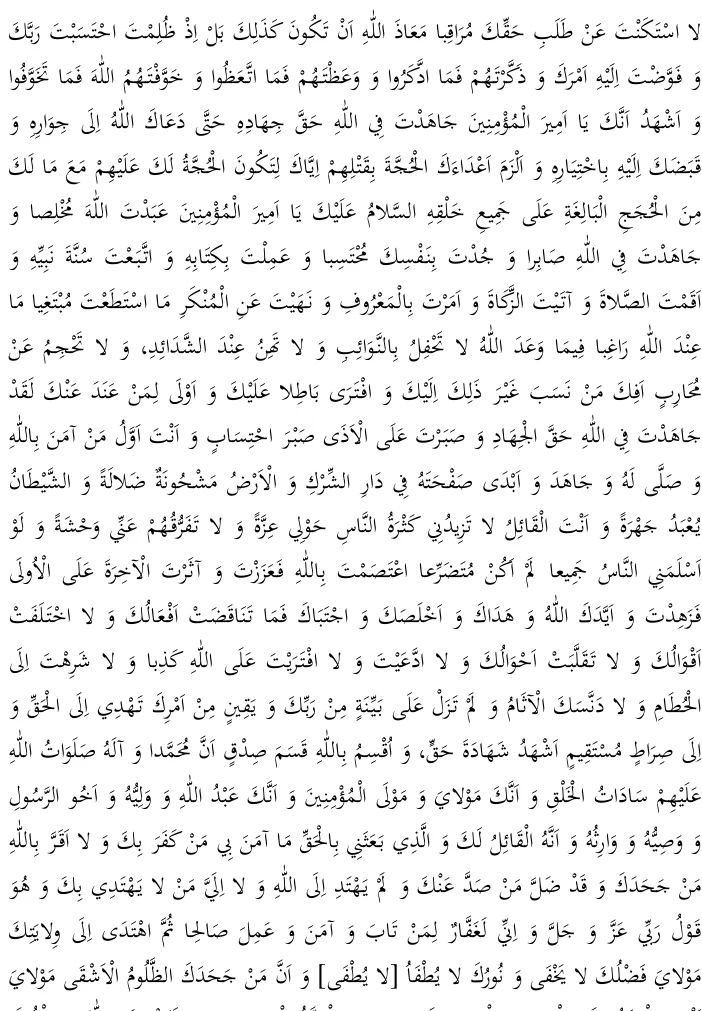
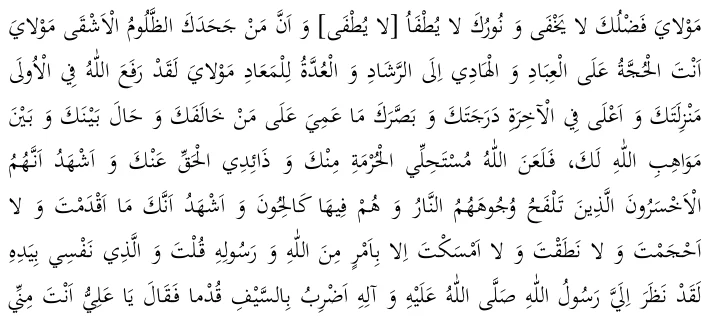
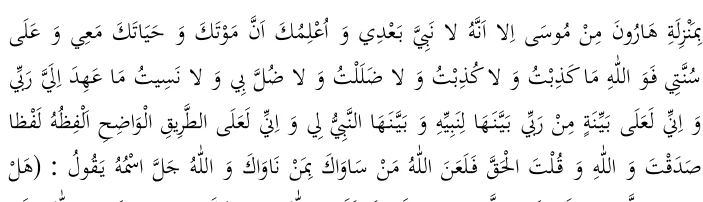
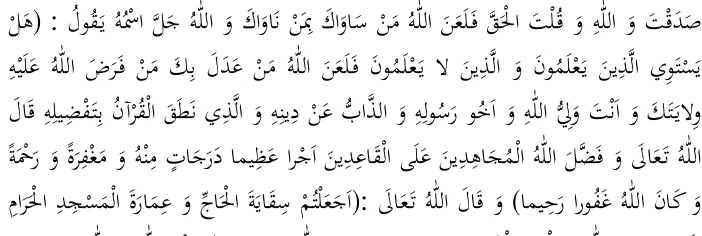
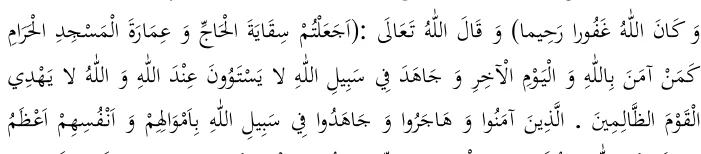
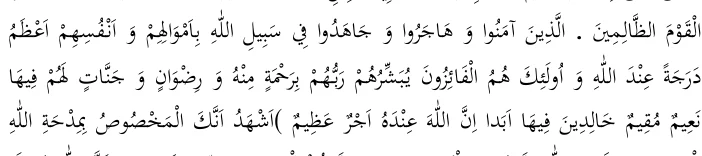
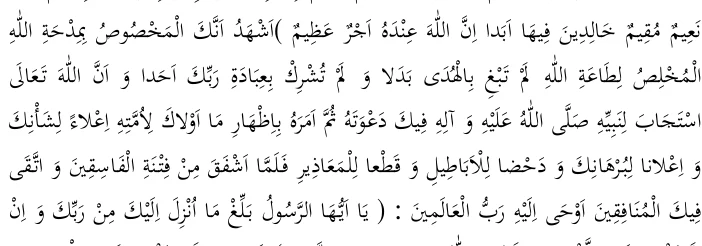
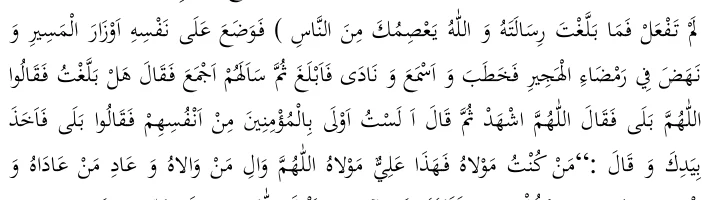
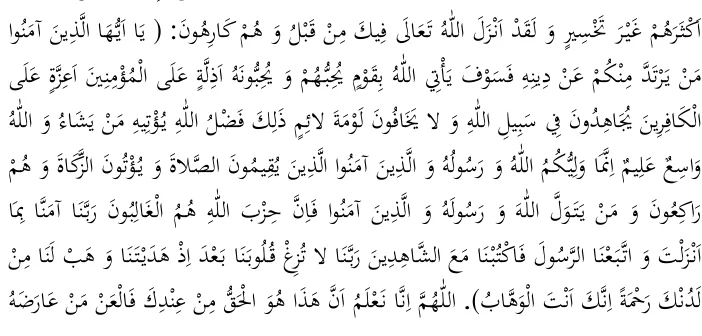
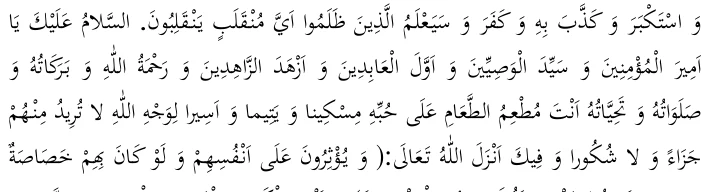
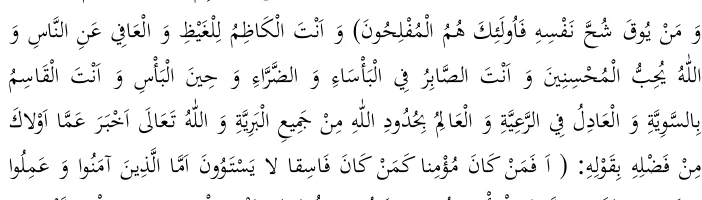
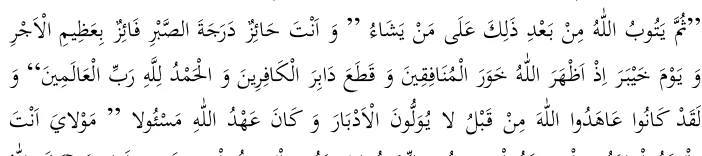
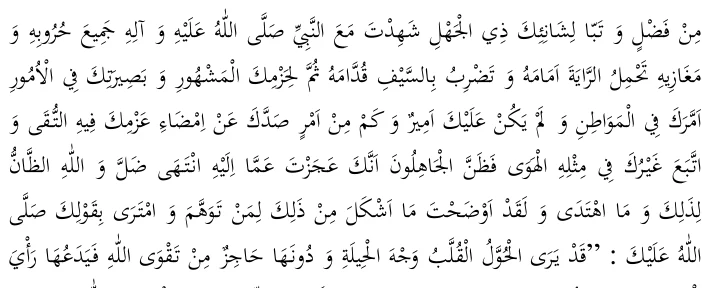
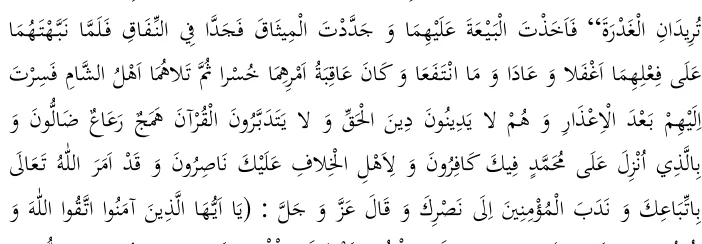
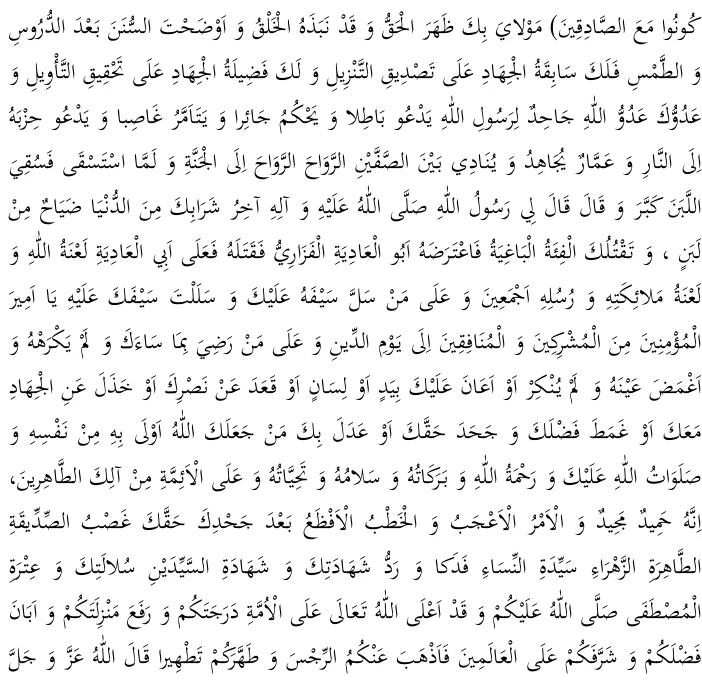
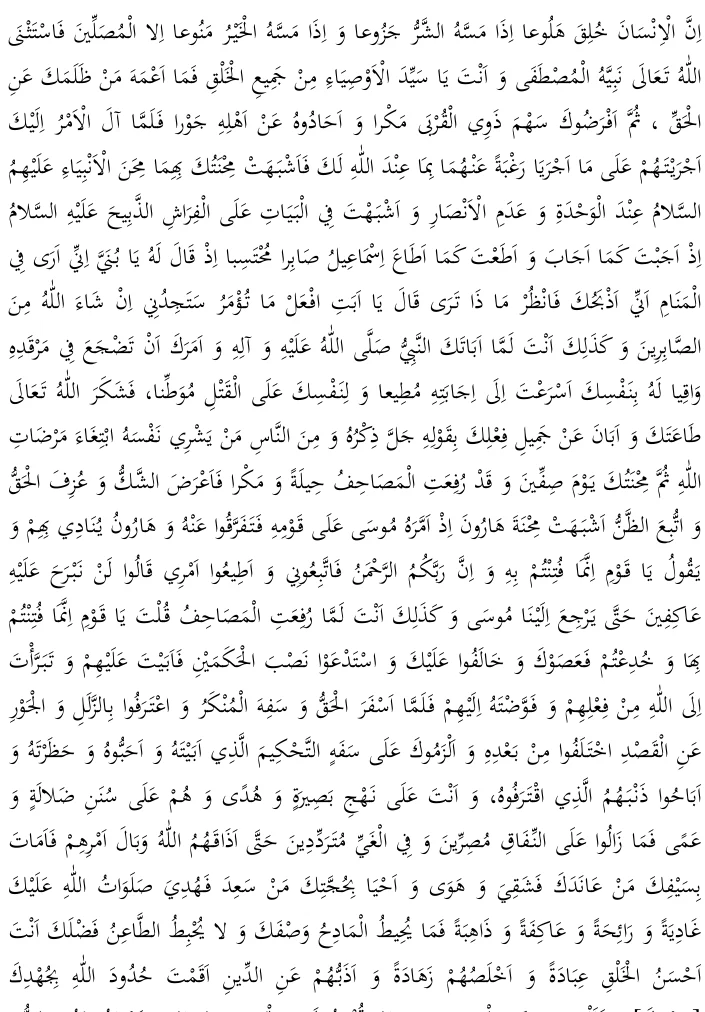
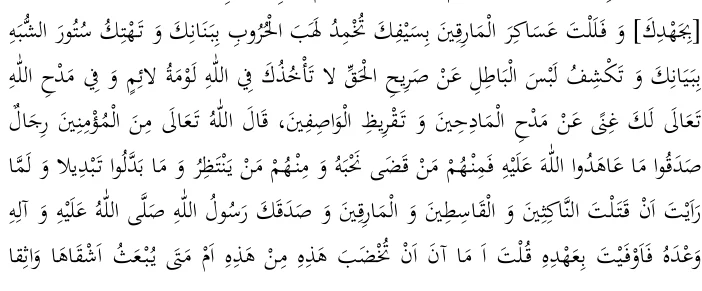
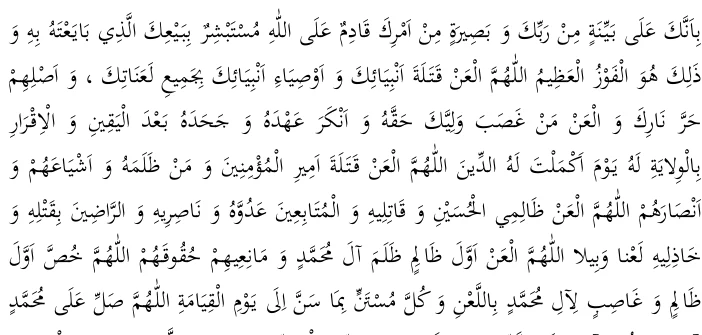
Second: Though authoritative chains of authority, It is narrated that Imam ‘Ali ibn Muhammad al-Hadi (‘a) said the following form of ziyarah at the holy tomb of Imam ‘Ali Amir al-Mu’minin (‘a) on the Ghadir day when he was summoned by the ‘Abbasid ruler, al- Mu’tasim, to be present before him in Iraq:
With the intention of visiting the holy tomb of Imam ‘Ali (‘a), you may stop at the gate of the dome of the holy shrine and seek permission of entrance. However, Shaykh al-Mufid says that you may wash yourself, put on the cleanest of your clothes, and say the following form of seeking permission, which, beginning with the following statement, has been cited in the previous section of this book:

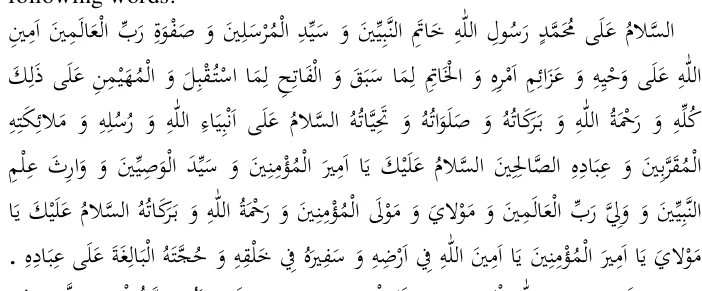
You may then enter there with your right foot and walk until you stop at the holy tomb, which you may face and make the kiblah direction to be between your shoulders. There, you may say the following words:
.


]

[
]

[
.
]

[

]

[
: )
(

:)
.
(
: )

(
:“

. “

: )
(.


.
:)

(
: )

(
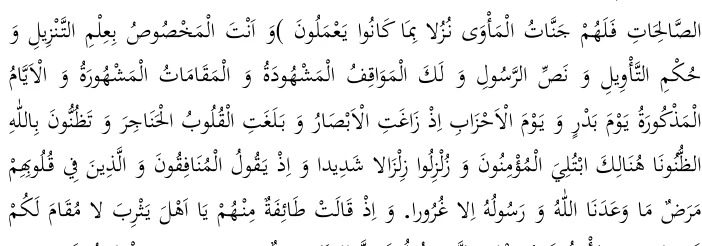
.
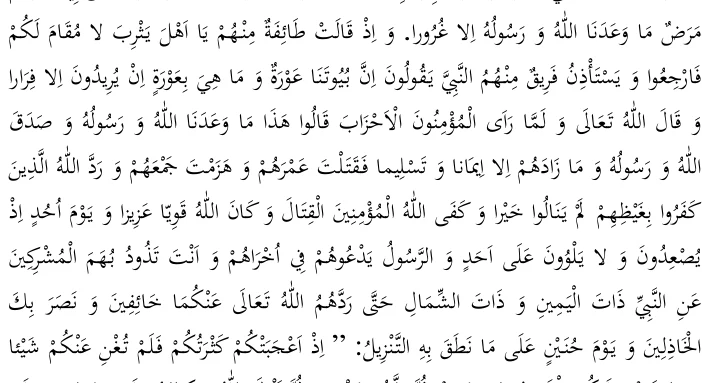
” :
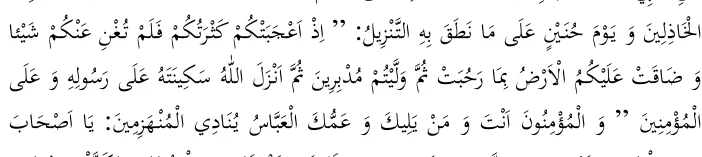
”

:
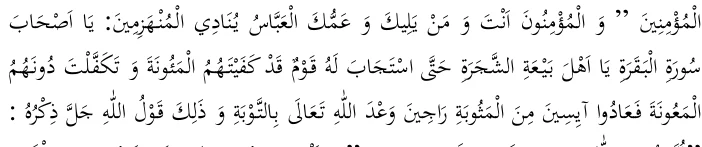
:
”

”
”

” :

]

[

“

:“

“
: )

(
]

[
]

[

.
In my book of Hadiyyat al-Za’ir, I have mentioned the chain of authority of this form of ziyarah and I have also said that this form can be said at all times, from nearness or from remote places. In other words, this form of ziyarah is in fact not dedicated to a certain occasion or place. This is therefore a good opportunity for the worshippers who long for visiting the tomb of Imam ‘Ali, the head of the Imams (‘a), to say this form of ziyarah.