DUA OF PROSTRATION OF THANKSGIVING
Although many utterances are reported to be said in thanksgiving prostrations, here are the easiest of these:
First: Through a valid chain of authority, Imam al-Rida(a.s.) is reported to have instructed that one may repeat the following word one hundred times in thanksgiving prostrations:

One may also repeat the following word one hundred times:

In the book of ‘Uyun Akhbar al-Rida, it is reported on the authority of Raja’ ibn Abi’l-Dahhak that Imam al-Rida(a.s.), on his way to Khurasan, used to prostrate himself after the post-Afternoon Prayer utterances and repeat the following phrase one hundred times:

Second: Al-Kulayni has reported through a valid chain of authority that Imam al-Sadiq(a.s.) said: The closest position of a servant to Almighty Allah is when he prostrates himself before Him and supplicates Him. Therefore, when you prostrate, you may say:

You may now pray Him to grant you your request.
After that, you may say:
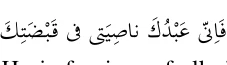
You may then pray Almighty Allah, for He is forgiver of all sins and no problem is unsolvable for Him.
Third: Al-Kulayni has reported through an authenticated chain of authority that Imam al-Sadiq(a.s.) said: One night, I saw my father prostrating himself in the mosque. I could hear him saying with tender tone:

Fourth: Through a valid chain of authority, al-Kulayni also reports that Imam Musa al-Kazim (a.s.) used to say the following supplicatory prayer while prostrating himself:

Fifth: Through a valid chain of authority, al-Kulayni also reports that a man complained to Imam al-Sadiq(a.s.) about an ailment that affected one of his bondwomen. The Imam said: In the thanksgiving
prostration after all obligatory prayers, you may say this supplicatory prayer:

You may then pray Him to grant you your request.
Sixth: Through several valid chains of authority, Imam al-Sadiq and Imam al-Kazim (a.s.) are reported to have very frequently said the following supplicatory prayer when they did the thanksgiving prostrations:

Seventh: Through an authentic chain of authority, it is reported that Imam al-Sadiq(a.s.) used to say the following statement when he prostrated himself:
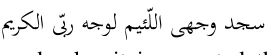
Eighth: In some considerable reference books, it is reported that Imam AliAmeer al-Momineen(a.s.) said: The most favorite words to Almighty Allah is that when a servant (of Him) prostrates himself, he should repeat the following statement three times:
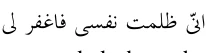
Ninth: In the book of al-Ja’fariyyat, it is recorded through an authentic chain of authority that Imam al-Sadiq(a.s.) quoted the Holy Prophet (s.a.w.a.) to have used to said when he placed his face on the ground for prostration:

.
Tenth: Al-Qutb al-Rawandi has reported Imam al-Sadiq(a.s.) to have said: Whenever an ordeal or agony afflict or accumulate against you, you may prostrate on the ground and say:

.
In the book of ‘Uddat al-DAI, Imam al-Sadiq(a.s.) is reported to have said, “Anyone who is afflicted by a disaster, a misfortune, or a tribulation may bare his knees and arms to the elbows and stick them, as well as his chest, to the ground and supplicate for the settlement of his problem.”
Eleventh: Ibn Baabwayh, through a valid chain of authority, reports Imam al-Sadiq(a.s.) as saying: When a servant repeats the following supplicatory prayer three times while prostrating, the Blessed and Exalted Lord will answer him, “Here I am to respond to you, My servant! Ask for what you need.”
This is the supplicatory prayer:
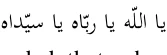
In the book of Makarim al-Akhlaq, it is recorded that when a servant prostrates himself and repeats the following supplicatory prayer all in one breath, the Blessed and Exalted Lord will answer him, “Here I am to respond to you. What do you need?”
This is the supplicatory prayer:
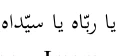
Twelfth: In the book of Makarim al-Akhlaq too, Imam al- Sadiq(a.s.) is reported to have related that the Holy Prophet (s.a.w.a.) passed by a prostrating man and could hear him saying this supplicatory prayer:
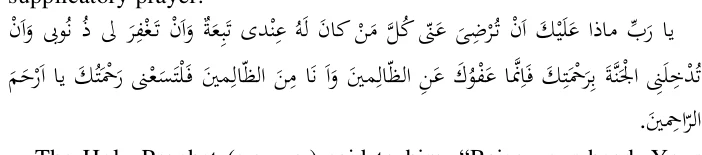
The Holy Prophet (s.a.w.a.) said to him, “Raise your head. Your prayer has been responded. You have just prayed Allah with the supplicatory prayer of a prophet who lived among the people of ‘Ad.”