GENERAL TAQIBAAT
The following prayers and recommended devotional acts have been quoted from Shaykh al-Tusi’s famous book of Misbah al-Mutahajjid and other reference books.
After you say the Taslim statement - the closing part of the ritual prayers - and accomplish your prayer, repeat the Takbir statement (i.e. Allahuakbar; Allah is the Greatest) three times while raising your hands to the level of your ears and then say:
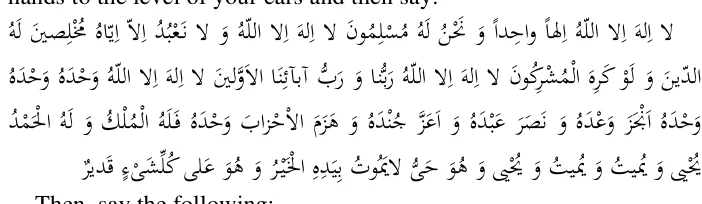
Then, say the following:

Then, say the following:
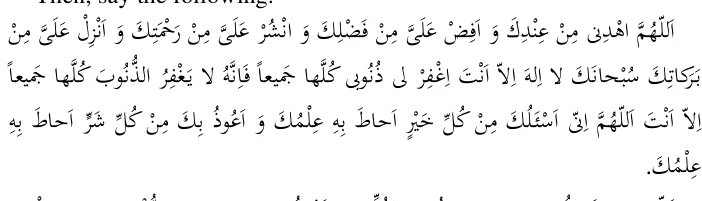
.
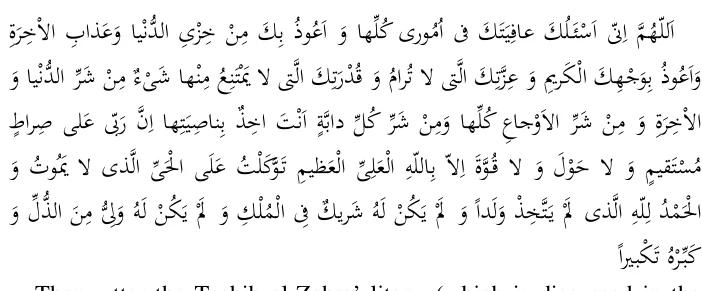
Then, utter the Tasbih al-Zahra’ litany (which is discussed in the attached book of al-Baqiyat al-Salihat).
Before you move from your prayer-place, repeat the following litany ten times:

It is narrated that a great reward is obtained by saying this litany, especially after the Dawn (Fajr) and Evening (Isha’) obligatory Prayers and at sunrise and sunset.
Then, say the following:
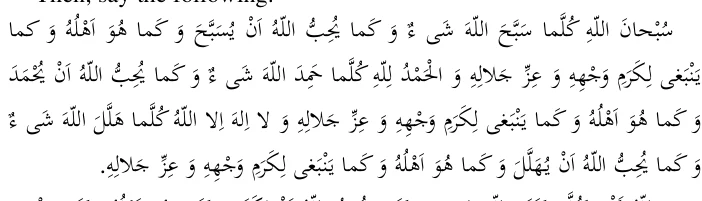
.
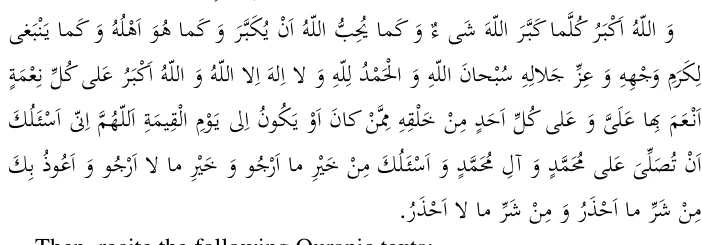
.
Then, recite the following Quranic texts:
(1) Surahal-Hamd (i.e. al-Faatehah No. 1), (2) Ayah al-Kursi (2:255-257), (3) Verses of Bearing Witness (Ayat al-Shahadah; 3:18- 19), (4) Verses of Kingdom (Ayah al-Mulk; 3:26-27), and (5) Verses of Subservience (Ayah al-Sakharah 7:54-56).
Then, repeat the following verses (Surah al-Saaffaat 37:180-183) three times:

Then, repeat the following supplicatory prayer three times:

This supplicatory prayer was taught by Archangel Gabriel to Prophet Yusuf (Joseph) - peace be upon him - when he was in prison.
Then, hold your beard with your right hand, raise your left hand towards the sky, and repeat the following supplicatory prayer seven times:

Keeping on the same situation, repeat the following supplicatory prayer three times:

.
After repeating Surah al-Ikhlaas (or al-Tawheed; No. 112) twelve times, say the following supplicatory prayer:
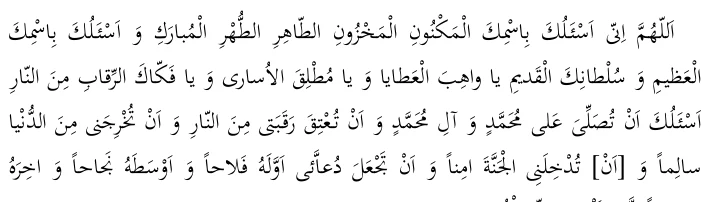
[

According to al-Sahifah al-Alawiyyah (a collection of Imam Ali’s supplications), the following supplicatory prayer is advisably said after the obligatory prayers:

You may also say the following supplicatory prayer:
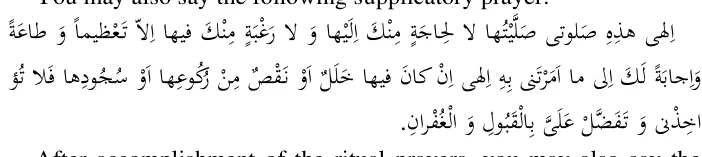
.
After accomplishment of the ritual prayers, you may also say the following supplicatory prayer, which the Holy Prophet (s.a.w.a.) taught to Imam AliAmeer al-Momineen(a.s.) for developing memory:
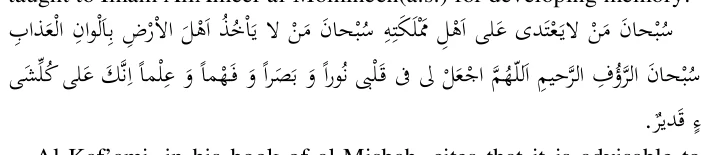
.
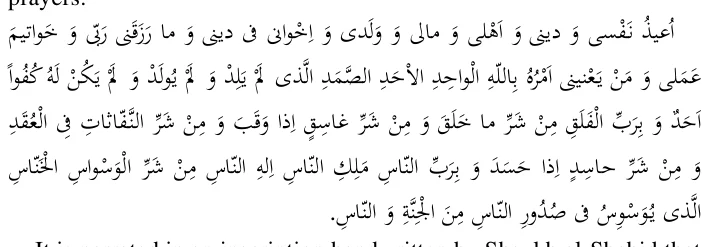
Al-Kaf’ami, in his book of al-Misbah, cites that it is advisable to repeat the following supplicatory prayer three times after obligatory prayers:
.
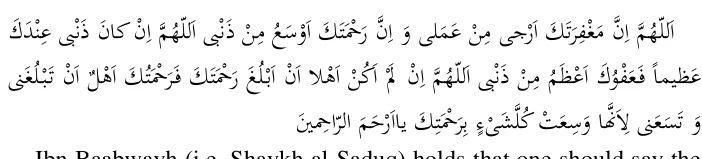
It is narrated in an inscription handwritten by Shaykh al-Shahid that the Holy Prophet (s.a.w.a.) said: Whoever desires that Almighty Allah will not show him his evildoings (that he did in this world) on the Resurrection Day and will not open the record of his evildoings, should say the following supplicatory prayer after each obligatory prayer:
Ibn Baabwayh (i.e. Shaykh al-Saduq) holds that one should say the following litany immediately after uttering Tasbih al-Zahra’:
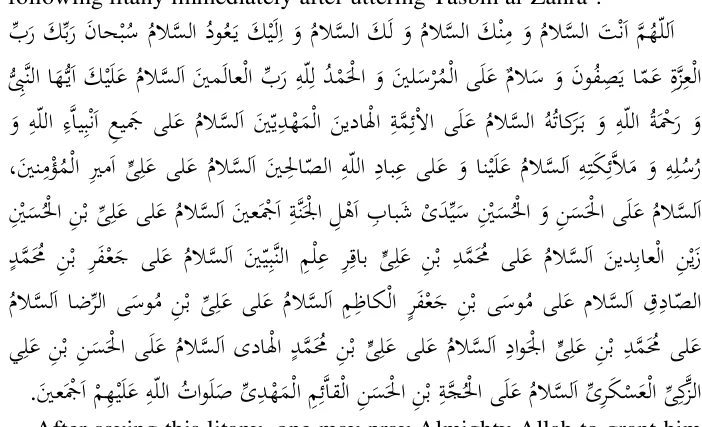
After saying this litany, one may pray Almighty Allah to grant him all his personal desires.
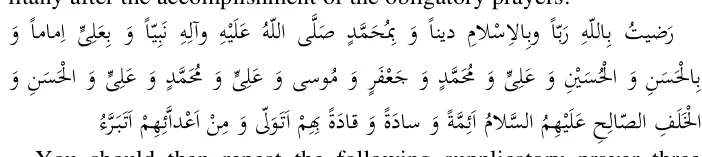
Shaykh al-Kaf’ami has also said that one should utter the following litany after the accomplishment of the obligatory prayers:
You should then repeat the following supplicatory prayer three times:

.