SIXTH ZIYARAH
The following form of Ziyarah has been mentioned by a number of our scholars among whom is Shaykh Muhammad ibn al-Mashhadi who quotes that Muhammad ibn Khalid al-Tayalisi has reported Sayf ibn ‘Umayrah to have related the following:
A group of our acquaintances and I accompanied Safwan al- Jammal to al-Ghari for the purpose of visiting the tomb of Amir al- Mu’minin (‘a). When we accomplished ziyarah, Safwan turned his face toward the tomb of Imam al-Husayn (‘a) and instructed that we should visit Imam al-Husayn ibn ‘Ali (‘a) from this place at the head’s side of Imam ‘Ali’s tomb. He then told us that he, once, accompanied Imam al-Sadiq (‘a) to this very place where the Imam (‘a) did the same thing that Safwan had just done and said the same supplication. Safwan added, “The Imam (‘a) then advised me to persist in this method and form of Ziyarah and to visit Imam ‘Ali and Imam al- Husayn (‘a) with this form, for he would guarantee, on behalf of Almighty Allah, that any one who visits them with this form of ziyarah and says this supplication, be it from close or far distance, will have his ziyarah accepted, his efforts rewarded, his greetings conveyed (to the Imams) without any barrier, and his requests granted by Almighty Allah whatever they are.”
The entire text of this narration about the merits of saying this form of ziyarah, along with all of its etiquettes, and saying this supplication will be cited after the famous form known as Ziyarah of ‘Ashura’ and the famous supplicatory prayer known as Du’a’ ‘Alqamah (also called Du’a’ Safwan).
Hereinafter, the form of this ziyarah is cited:
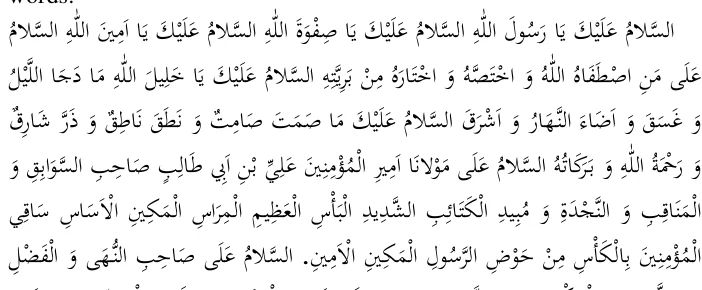
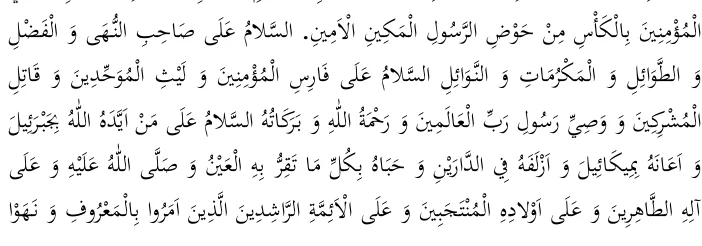
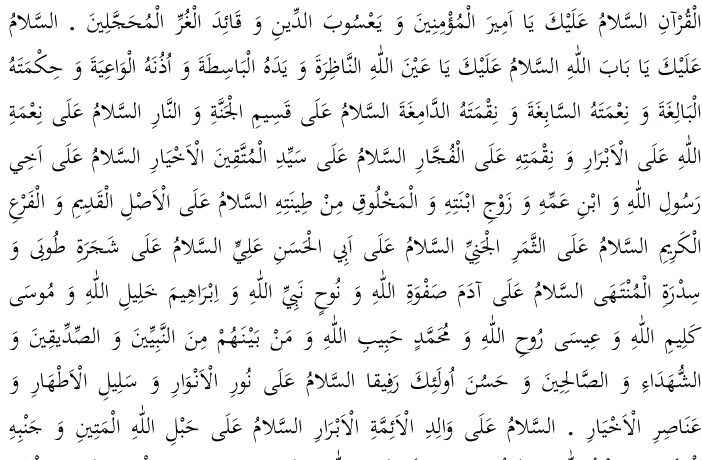
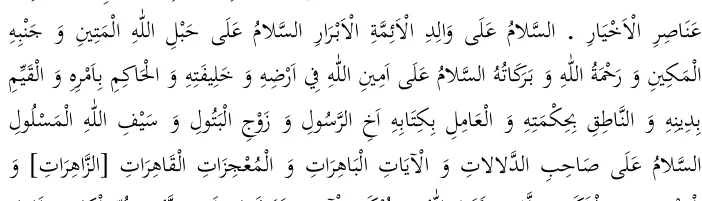
You may face the tomb of Imam ‘Ali (‘a) and say the following words:
.

.
.
]
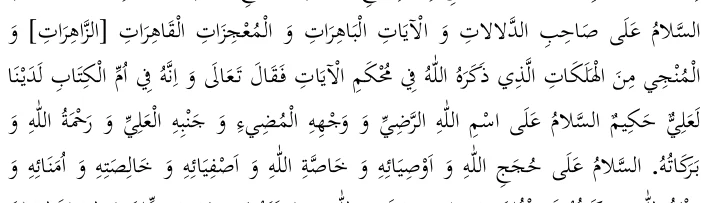
.
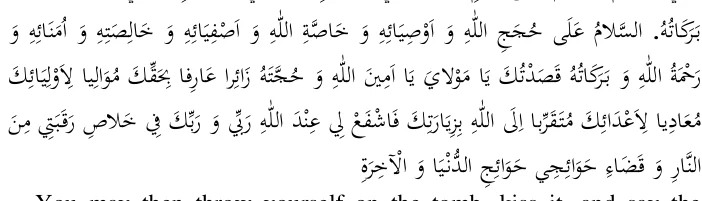
You may then throw yourself on the tomb, kiss it, and say the following:

]

[
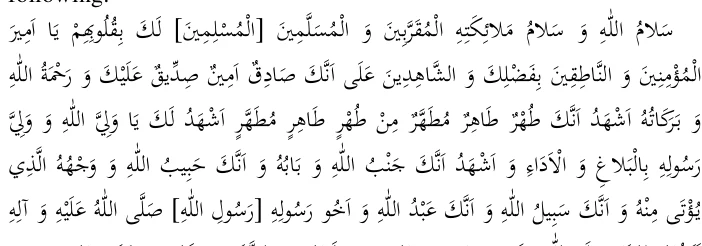
]

[

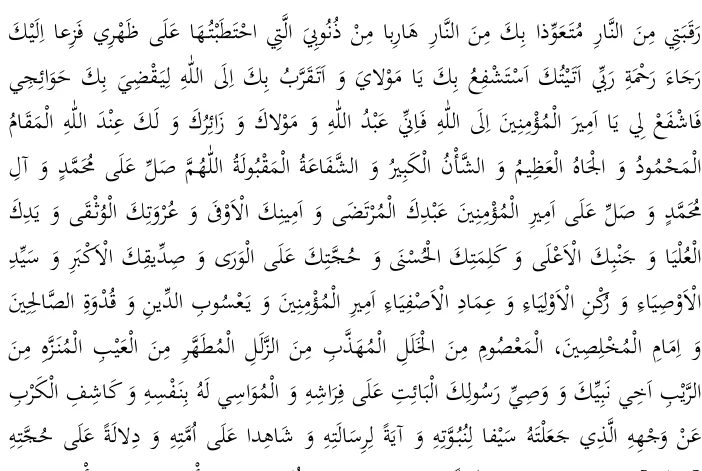
]
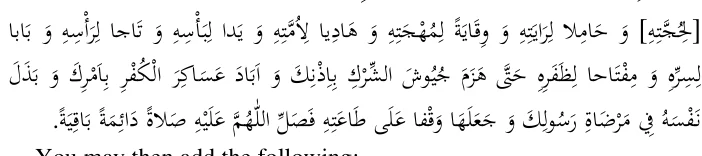
.
You may then add the following:
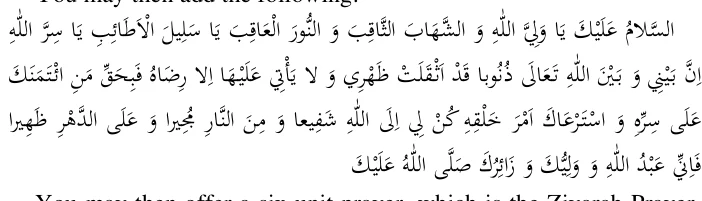
You may then offer a six-unit prayer, which is the Ziyarah Prayer, and supplicate for whatever you want. Then, you may say the following:

You may then turn your face towards the tomb of Imam al-Husayn (‘a), point to it, and say the following:

.
You may then say the famous supplicatory prayer known as Du’a’ Safwan (or Du’a’ ‘Alqamah), which will be cited after the famous Ziyarah of ‘Ashura’, up to its end; i.e. up to this paragraph:

You may then face the kiblah direction and say the same Du’a’ Safwan from its beginning:

up to the following statements:

.
You may then turn your face toward the tomb of Amir al-Mu’minin (‘a) and say the following words:

.