THE WHISPERED PRAYER (MUNAJAT) OF AMEERUL
MOMENEEN (A)
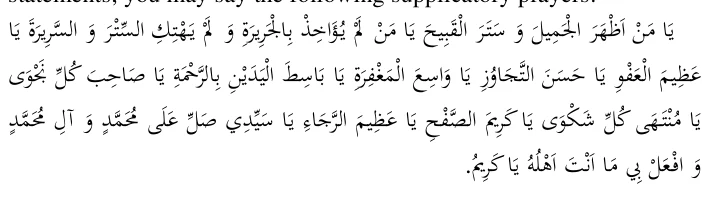
At the place where Imam ‘Ali Amir al-Mu’minin (‘a) was martyred, you may offer a two-unit prayer reciting Surah al-Fatihah and any other Surah. After accomplishment and saying the Tasbih statements, you may say the following supplicatory prayers:
.
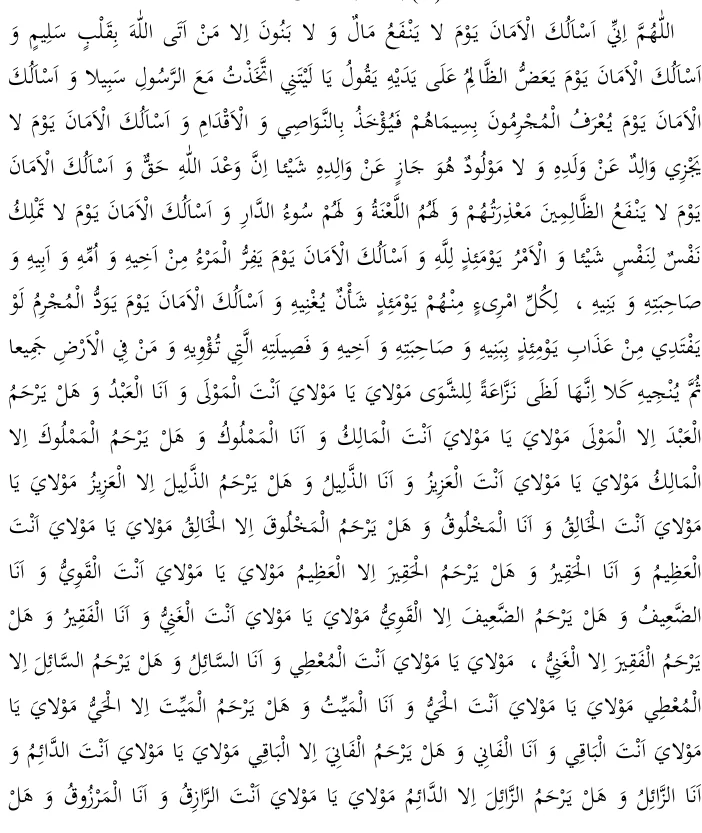
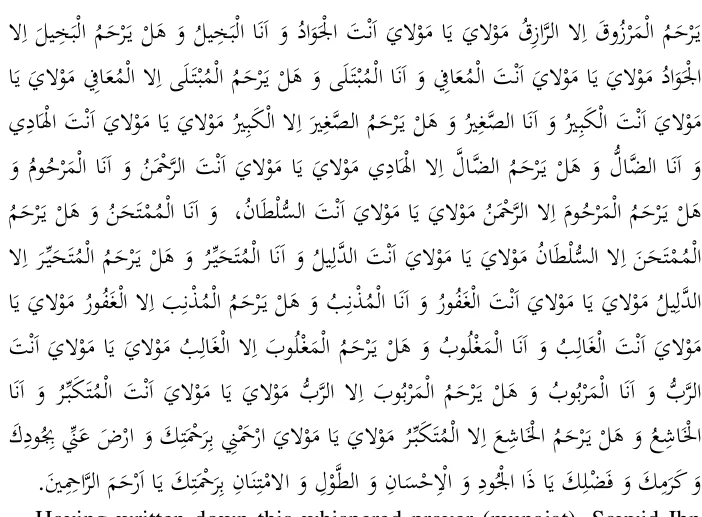
THE WHISPERED PRAYER (MUNAJAT) OF AMEERUL
MOMENEEN (A)
.
Having written down this whispered prayer (munajat), Sayyid Ibn Tawus followed it with a long supplicatory prayer named du’a’ al- aman (Supplication for Security). However, this supplicatory prayer is too lengthy to be mentioned in this book.
It is also recommended to say at this very place the post-prayer supplication, which will be mentioned after the prayer at Zayd Ibn Sawhan Mosque.
It is also worth mentioning that in my book of Hadiyyat al-Za’ir, I have discussed the controversy about the actual place of Imam ‘Ali’s prayer-niche where he was stricken with the sword, since some historians have mentioned that the currently familiar mihrab is the place intended, while others have specified the old, currently abandoned mihrab as the place where Imam ‘Ali (‘a) was stricken with the sword. However, it is precautionary to do these acts at both of these places.
DEVOTIONAL ACTS AT IMAM AL-SADIQ’S BENCH
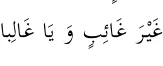
You may then walk to Imam al-Sadiq’s place (maqam al-sadiq), which is near to the tomb of Muslim ibn ‘Aqil. You may offer there a two-unit prayer; and when you finish and say the Tasbih statements, you may then say the following supplicatory prayer:

]

[
]

[
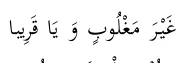
]

[

.
You may then mention your needs.
It is worth mentioning to repeat what I have already mentioned about the order of the acts at Masjid al-Kufah:
Be it known to you that the order of doing the recommended acts in Masjid al-Kufah according to the opinion of the majority and according to the book of al-Mazar al-Qadim is that the acts to be done in the center of the mosque come directly after the acts at the fourth column. Hence, the acts of the seat of judgment and the place of washtub should be the last of all, which means that they are done after the accomplishment of the acts at the seat of Imam al-Sadiq (‘a) (dakkat al-sadiq).
In this book, I imitate the order followed by Sayyid Ibn Tawus, in his book of Misbah al-Za’ir, ‘Allamah al-Majlisi, in his book of Bihar al-Anwar, and Shaykh Khazir, in his book of al-Mazar.
In conclusion, one who desires to follow the opinion of the majority may do the acts at the seat of judgments (dakkat al-qaza’) and the place of washtub (bayt al-tast) after accomplishing all the other acts at Masjid al-Kufah.