12. Benefits Of The Dust From The Holy Tomb Of Imam Husayn (‘A) And Qualities Of Solitary Medicines
It is mentioned in many traditions that the dust from the holy grave of Imam Husayn (‘a) has the cure for all diseases.
It is mentioned in another tradition from Imam Ja’far As-Sadiq (‘a) that if someone falls ill, and he seeks cure from dust of the grave of Imam Husayn (‘a), he will be definitely cured, except if he is in his terminal illness.
In the third tradition, he said that the dust of the grave of Imam Husayn (‘a) is cure for all diseases and security from every fear.
He said in another tradition that you should raise the uvula of your children with dust of the grave of Imam Husayn (‘a), so that they may remain secure from calamities.
It is mentioned in another traditional report that when Imam Ali Ar-Ridha’ (‘a) sent any goods somewhere, he placed a little dust of the grave of Imam Husayn (‘a) in them.
It is mentioned in reliable tradition that Ibn Yafur asked Imam Ja’far As-Sadiq (‘a) that, “How do some people, who use the clay of Imam Husayn’s grave benefit from it while others don’t?”
Imam (‘a) replied, “No, by Allah, except whom there is no god, anyone, who uses it believing that he will benefit from it through Allah, will benefit.”
It is mentioned in another tradition that some of our companions said: A lady gave me some yam and asked me to give it to the keepers of Kaaba to use it in covering of Kaaba. But I did not want to give it to them, because I knew them.
So when we came to Medina, I went to Imam Al-Baqir (‘a) and said, “May I be sacrificed on you, a lady gave me some yam and asked me to give it to the keepers of Kaaba, but I don’t want to give it to them.”
Imam (‘a) said, “Sell it and buy some honey and saffron with its price. Then take some clay from the grave of Imam Husayn (‘a), mix it with rain water and add some honey and saffron to it. Distribute it among the Shi’a so that they may cure their patients with it.”
He said in another traditional report that the clay of Imam Husayn’s (‘a) grave is a cure, even if it is collected a mile away from the grave.
He said in another traditional report that the clay of Imam Husayn’s (‘a) grave is a cure, even if it is
collected seventy-seven hands from the grave.
He said in another reliable traditional report that it can be used as a cure, even if it is collected four miles away from the tomb of Imam Husayn (‘a).
He also said that nothing is as effective a cure as this dust and among the things, which reduce its effect are: (1) keeping it in improper place (2) the one consuming it lacks faith in its cure. As for the one, who is certain of its cure, whenever he will seek cure from it, he will not need any other cure.
The devils and disbeliever Jinns also spoil it by rubbing themselves against it. Nothing passes by it, without smelling it. As for the devils and disbeliever Jinns, they envy humans because of it, so they rub themselves against it and all of its fragrance vanishes. Innumerable devils and disbeliever Jinns prepare themselves as soon as the clay leaves the tomb, as they cannot enter it, because of angels, who guard it and they rub themselves against it while it is in the hands of the person carrying it.
If any part of it remained intact and is used to treat a patient, he would be cured immediately. So when you take from this clay, keep it hidden and mention the Almighty Allah more on it.
I have been informed that some people, who collect the dust belittle it so much that some even place it in feedbag of their camels, mules and donkeys, or in their own food containers, or in handkerchiefs used to wipe hands after eating or in their saddlebags.
How can a person, who dishonours it in this way, seek cure from it? Indeed! the uncertain hearts of those, who belittle that which leads to their righteousness, will destroy its effect.
It is mentioned in another tradition that I (the narrator) said to Imam As-Sadiq (‘a), “I am a man with many illnesses and diseases and there is no medicine that I haven’t tried.”
Imam (‘a) said: Why have you not used the dust of Imam Husayn (‘a)? Indeed, it contains the cure for every disease and it is protection against any fear; but when you collect it, you should recite:


Translation: O Allah! I ask You through the right of this clay, through the right of the angel, who took from it, through the right of the Prophet, who held it and through the right of the successors, who is lying in it to bless Muhammad and his family and to make it my cure against every disease and my protection against any fear.
Then Imam (‘a) added: The angel, who took from it was Jibra’il, who showed it to the Prophet and said, “This is the dust of this son of yours. Your Ummah will slay him after you.”
The Prophet, who held it was Muhammad and the successor, who is lying in it is Imam Husayn (‘a), the Chief of the martyrs.
I said, “I understand that it is a cure for every disease; but how is it a protection against any fear?”
Imam (‘a) replied: If you fear a ruler or anything like that, don’t leave your house without carrying some of it. When you collect it, you should recite:

Translation: O Allah! This is the clay of the grave of Husayn, Your Wall and the son of Your Wall and I have carried it as protection against that which I fear and that which I do not.
Imam (‘a) added, “It is possible that a tragedy, which you don’t fear might befall you.”
The narrator says: So 1 took it as he had ordered and by Allah, I became healthy. It was also my protection against what I feared and against what I didn’t fear, just as Imam (‘a) had said. Praise be to Allah, I haven’t seen any misfortune ever since.
It is narrated from Abu Hamza Thumali that Imam As-Sadiq (‘a) said: When you want to take away some clay of Imam Husayn’s grave, recite Surah Fatiha, Surah al-Falaq, Surah an-Nas, Surah Ahad, Surah al-Qadr , Surah Yasin and Ayat ul-Kursi. Then recite:






Translation: O Allah! (I ask You) through the right of Muhammad, Your Servant, Your Messenger, Your beloved, Your Prophet and Your Guardian!
And (I ask You) through the right of Amir Al-Mu’minin, Ali Ibn Abi Talib, Your Servant and the brother of your Messenger!
And (I ask You) through the right of Fatimah, the daughter of Your Prophet and the wife of your Wali!
And (I ask You) through the right of Hasan and Husayn, through the right of the Rightly Guided Imams!
And (I ask You) through the right of this dust and through the right of the angel, who is appointed to it!
And (I ask You) through the right of the Successor, who is buried in this dust, through the right of the body, which is lying within it and through the right of the grandson, who is held within it!
And (I ask You) through the right of all of Your angels, prophets and messengers to bless Muhammad and Aali Muhammad and to make this clay my cure from every disease and for anyone, who uses it as cure against every disease, illness and ailment. (Also) make it my protection against any fear.
O Allah! I ask You through the right of Muhammad and his family, to make it (the cause of) beneficial knowledge and extensive sustenance (for me) and to make it my cure from every disease, illness, sickness, plague, disability and all pain. Indeed, You have power over all things.
Then recite:


Translation: O Lord of this blessed and prosperous dust! (O Lord) of the angel, who brought it down with him! (O Lord) of the Successor, who is buried in it! Convey Your peace and blessing on Muhammad and Aali Muhammad and allow me to benefit from it. Indeed! You have Power over all things.
He said in another traditional report that when you want to consume the dust, first you should kiss it, then touch it to your eyes and don’t eat more than a gram of it; because one, who consumes too much, it is as if he has consumed the flesh of us, Ahl Al-Bayt (‘a). And when you pick the dust, you should recite:


Translation: O Allah, indeed I ask You by the right of the angel, which captures it and I ask You by the right of the prophet, who treasured it and I ask You by the right of the successor, who buried in it. That You bless Muhammad and the Progeny of Muhammad. And that You put in it the cure of all maladies and security from all fears and protection from all evils.
Then tie it up in a piece of cloth and recite Surah al-Qadr over it.
He said in another reliable tradition that if someone, who consumes dust from the grave of Imam Husayn (‘a) for any other intention other than seeking cure from it, it is as if he has consumed the flesh of us, Ahl Al-Bayt (‘a). And when one consumes it for cure, he should recite:


Translation: In the name of Allah, and by Allah. O Allah, Lord of this blessed and purified dust and the Lord of the effulgence, which was sent in it. And the Lord of the body, which rested in it and the Lord of the angels appointed for him. Make it cure of the malady of so and so.
In place of so and so mention his illness; then consume the dust and take a gulp of water. Then recite:


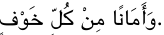
Translation: In the name of Allah and by Allah. O Allah, make for him a wide sustenance and a beneficial knowledge and cure from all maladies. Indeed You are powerful over everything. O Allah, Lord of the blessed dust and the Lord of the successor, who inherited it. Bless Muhammad and the progeny of Muhammad and make this dust a cure from all maladies and security from all fears.
It is narrated from Imam Musa Al-Kazim (‘a) that when the corpse is buried, place a tablet of dust of Kerbala besides his face.
It is mentioned in another tradition that the following five items should always remain with a believer: (1) toothbrush (2) comb (3) prayer mat (4) 34 bead rosary of Turbah32 (5) cornelian ring.
It is narrated from Imam Ja’far As-Sadiq (‘a) that one, who has a rosary of Turbah, if he recites repentance once, he will be rewarded for seventy repentances and if he only turns the beads, he will get the reward of seven repentances for every bead.
He said in another tradition that one, who indulges in buying and selling Turbah, it is as if he has traded in the flesh of Holy Imam (‘a).
We should also know that it is well known among scholars that Turbah can be consumed equal to a gram; but as the word of Masoor (lentil) is mentioned, it is better if we consume only that much.
It is narrated from Imam Ja’far As-Sadiq (‘a) that one, who has fever, he should take two are three dirhams of Qatuna seeds, he will get relief from that malady and will become secure from delirium and pleurisy.
He said in another tradition that the excellence of jujube over other fruits is as the excellence of us, Ahl Al-Bayt (‘a) over the rest of the people.
It is narrated from Amir Al-Mu’minin (‘a) that jujube cures fever.
It is mentioned in another traditional report that Ibn Abul Haseeb says that I had whiteness in my eyes and I could not see anything in dark. I saw Amir Al-Mu’minin (‘a) in dream one night. He said: Grind jujube and apply it to your eyes. When I woke up, I grinded jujube along with the seed and applied it. My eyes became healthy again.
It is narrated from the Messenger of Allah (S) in reliable tradition that you should seek cure from Meccan Senna,33 because if there is anything, which can ward off death, it is Meccan Senna.
It is narrated from Imam Ja’far As-Sadiq (‘a) that four things make ones health normal: Surani pomegranate, unripe dates, violet and chicory.
It is narrated from Imam Ja’far As-Sadiq (‘a) that Kalonji is cure for all maladies, except death.
It is mentioned in some traditional reports that people asked the Messenger of Allah (S) the method of using nigella indica, that is Kalonji. He replied: Tie up twenty-one seeds in a piece of cloth and soak it in water at night.
In the early morning, put two drops of that water in the right nostril. Repeat this the following day as well. On the third day, put one drop in the right nostril and two drops in the left; but every night changes the seeds for soaking.
It is narrated from Imam Ja’far As-Sadiq (‘a) in another traditional report that a person complained to him of excess urination. He said: You should take black seeds; that is Kalonji late at night.
He also said that I take the same for fever, headache, sore eyes, stomach ache and all maladies and the Almighty Allah cures me through it.
It is narrated from the Messenger of Allah (S) that an angel is appointed on every tree, leaf and grain of purslane and as long as that tree, leaf or grain does not decay that angel remains with it. The roots and branches of that tree ward off grief and sorcery and its seeds contain cure for seventy-two maladies. So, you should use wild rue and mastic as medicines.
It is narrated from Imam Ja’far As-Sadiq (‘a) that the Satan runs away to a distance of seventy houses from the house, which contains wild rue and wild rue contains remedy for seventy maladies, the least of them being leprosy.
It is mentioned in another traditional report that some prophet complained to Allah about the cowardice of his followers. It was revealed: Ask them to consume wild rue, as it makes those who consume it, valiant.
He said in the same traditional report that the prophets have liked mastic and its smoke goes up to the
sky the soonest. It removes Satans and calamities.
It is narrated from Imam Husayn (‘a) that if people knew the benefits of yellow haleela,34 they would buy it at its cost in gold.
It is narrated from Imam Ali Ar-Ridha’ (‘a) that fig is beneficial for colic. He also said that eating fig removes foul mouth odour, bones are strengthened, it promotes growth of body hair and different kinds of pains are removed.
It is narrated from the Messenger of Allah (S) that piles, gout and inner coldness are cured by fresh and dried figs.
Imam Ja’far As-Sadiq (‘a) said that eating purslane leaves sharpens the intellect and no leafy vegetable is beneficial as that.
Imam Ali Ar-Ridha’ (‘a) said that Badroj35 is our vegetable and tara tezak is the vegetable of Bani Umayyah.
Imam Ja’far As-Sadiq (‘a) said that lettuce reduces blood pressure.
It is narrated from Imam Ja’far As-Sadiq (‘a) that the diet of His Eminence, Khizr and Ilyas was celery and dumbalan36
It is narrated from the Messenger of Allah (S) that one, who eats rue before going to bed, that night he will remain safe from internal and external maladies and from pleurisy.
It is narrated in another tradition that the Messenger of Allah (S) used to get dill seeds, kalonji, aabshan37 powered together and he used to take it after having fatty or heavy foods. And sometimes he mixed salt in it and took it before dinner as well. And he used to say: If I eat this powder on empty stomach, I don’t worry about eating anything else, because it strengthens the stomach, removes phlegm and keeps one secure from paralysis.
The Holy Prophet (S) said that the Almighty Allah has endowed a special blessing to honey; that it contains the cure of all ills and seventy prophets have invoked blessings on it.
Imam Ja’far As-Sadiq (‘a) said that vinegar of wine eliminates the worms of the stomach and enhances intellect.
He said: Consuming Ashnaan38 weakens the knees, destroys semen and creates foul mouth odour.
He said: One, who consumes dill seeds and walnut; if he is suffering from piles, it will be cured, because dill seeds and walnut together eliminate piles, remove flatulence, makes the stomach soft and warm the kidneys.
He said: Abshaan and salt taken together remove flatulence; softens the stool, the phlegm is eliminated, urine is clear, there is fragrance in mouth, no hardness remains the stomach and the paralysis goes away and it enhances sexual power.
It is mentioned in many traditions that massaging salt removes poison of scorpion and stinging creatures.
1. One dirham is twelve grams approx. 2. It is a kind of sweet fruit or wild berry. 3. A kind of fever. 4. Botanical name: nigella indica. They are small, black seeds. 5. A kind of fever. 6. Similar to myrobalan. 7. Myrobalan. 8. Abarfiyun may be misprint for afarbiyun (euphorbium). 9. It is an herb containing seeds, which are called Raihan. 10. Unit of weight, around 450 grams. 11. Hydrocephalus of new-born children. 12. Seeds of nigella indica. 13. Truffle. 14. Lit: Imported oil. 15. Sacotri aloes. 16. Cyperus. 17. A type of grass. 18. A type of grass. 19. Leaves resembling celery. 20. A boil, in the centre of which is a worm. 21. Myrobalan-like nut. 22. Bellaric myrobalan. 23. Myrobalan. 24. Myrobalan-like nut. 25. Bellaric myrobalan. 26. Myrobalan 27. A plant, which grows on the shores of Oman and India. 28. Persian herb. 29. A fruit shaped like a small berry. 30. Myrobalan-like nut. 31. A dim star in Ursa. 32. Soil from the grave of Imam Husain (‘a). 33. Botanical name: Cassia lanceolata. 34. Myrobalan-like nut. 35. Badroj is a mountain herb and desert mint leaves, which grow on the banks of streams in excess. 36. Truffle. 37. A herb. 38. A plant with thin stems.
[1] [1] SHARES